Long before it was a day out from Athens, Epidaurus was a place people journeyed to in hope of healing and rest, and for the drama staged in its theatre. Here is the story behind what you’ll see, and why it still moves people today.
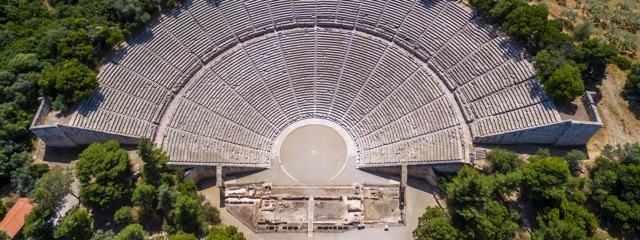
The Ancient Theatre of Epidaurus in its valley of pines
The Ancient Theatre · about 340–330 BC
A theatre built for sound.
Built into the slope of Mount Kynortion at the end of the Classical era, in about 340–330 BC, the theatre of Epidaurus is counted among the greatest monuments of Greek antiquity. UNESCO calls it one of the purest masterpieces of Greek architecture, renowned for its perfect proportions and exemplary acoustics.
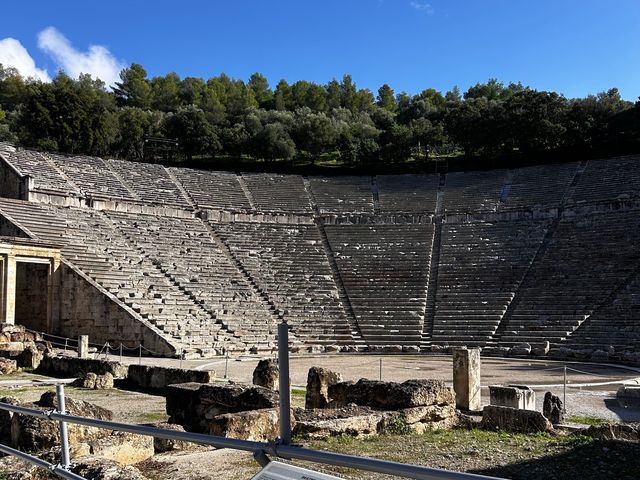
Its lower tier first seated around 8,000 people. When the upper tier was added in the mid-2nd century BC, the theatre could hold some 13,000 to 14,000 spectators.
Its real magic is sound. The traveller Pausanias was already praising its acoustics and harmony in the 2nd century AD. The seats curve around an orchestra that is a perfect circle 20 metres across, laid out from three centre points rather than one, and hollows at the base of the seats were shaped to improve how sound is absorbed and carried.
And the stage is still alive. Every summer ancient drama returns here with the Athens Epidaurus Festival, a major international theatre festival. Your guided visit explores the site by day; a performance is a separate evening plan.
c. 340–330 BCBuilt at the end of the Classical era
13,000–14,000Seats, once the upper tier was added
20 mThe perfect circle of the orchestra
The stone tiers, seen from ground level
The Sanctuary of Asklepios
A sanctuary built for healing.
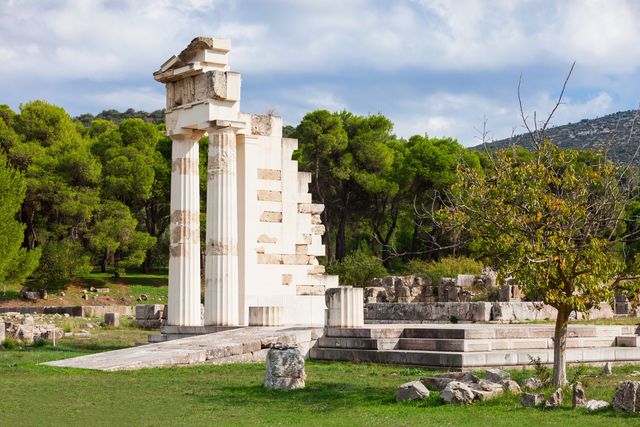
The theatre was only one part of something larger: the sanctuary of Asklepios, god of medicine, the most famous healing centre of the Greek and Roman world. Pilgrims came for its mild climate and mineral springs. Patients slept in the Abaton, hoping the god would appear in a dream and reveal their cure.
Around his temple rose the circular Tholos, a guest house of 160 rooms, baths, a stadium for the games held in his honour and, of course, the theatre. Considered the birthplace of medicine, the sanctuary shows the slow shift from faith in divine healing to the science of medicine.
Since 1988 the Sanctuary of Asklepios at Epidaurus has been a UNESCO World Heritage Site.
Restored columns among the sanctuary ruins
The museum
Stories carved in stone.
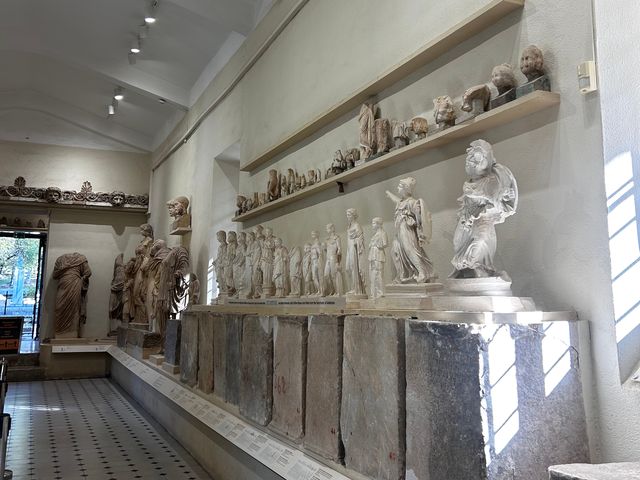
Beside the ruins, the site museum keeps what the earth gave back. Among its treasures are inscribed stone stelai recording the healings of the sanctuary, a remarkable record of how medicine grew out of faith.
One ticket covers the theatre, the archaeological site and the museum. With the guided visit, in the Ancient Theatre package or added as an extra, that ticket is included and the museum is part of your visit.
Sculptures and carved stones in the museum galleries
The Sunken City · Old Epidaurus
A city beneath the waves.
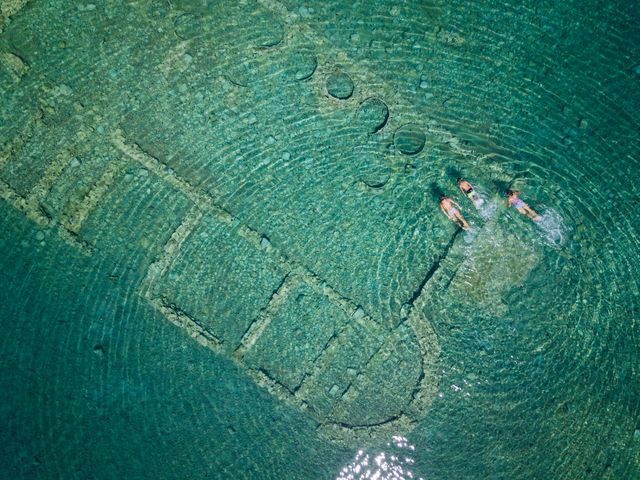
Down on the coast at Old Epidaurus, the sea keeps another secret. In the bay of Agios Vlasios, the remains of ancient buildings lie about two metres below the surface, so close that you can trace walls and floors from above.
They were spotted in the 1970s in an aerial photograph taken from a hot-air balloon. Archaeologists believe the main building was a rural Roman villa of the 2nd century, home to a wealthy family and their household.
Floating over them, mask on, is quietly unforgettable. Look, but never touch or stand on the walls: the ruins are fragile.
Swimmers above the submerged walls
How it fits your cruise day
History first, then the sea.
11:00–14:15Epidaurus: free time in the harbour village, or the guided visit to the theatre, sanctuary and museum
14:30–15:15The Sunken City swim, conditions permitting
16:45–17:30The island finish: Aegina or Aponisos, by season
The guided visit is included with the Cruise, Guided Ancient Theatre Tour & Hotel Transfers package, or can be added as a paid extra. An official licensed guide takes you from the harbour inland to the theatre, in English.
Your entrance tickets to the theatre and museum are included, so you simply walk in with your guide.